
Summary
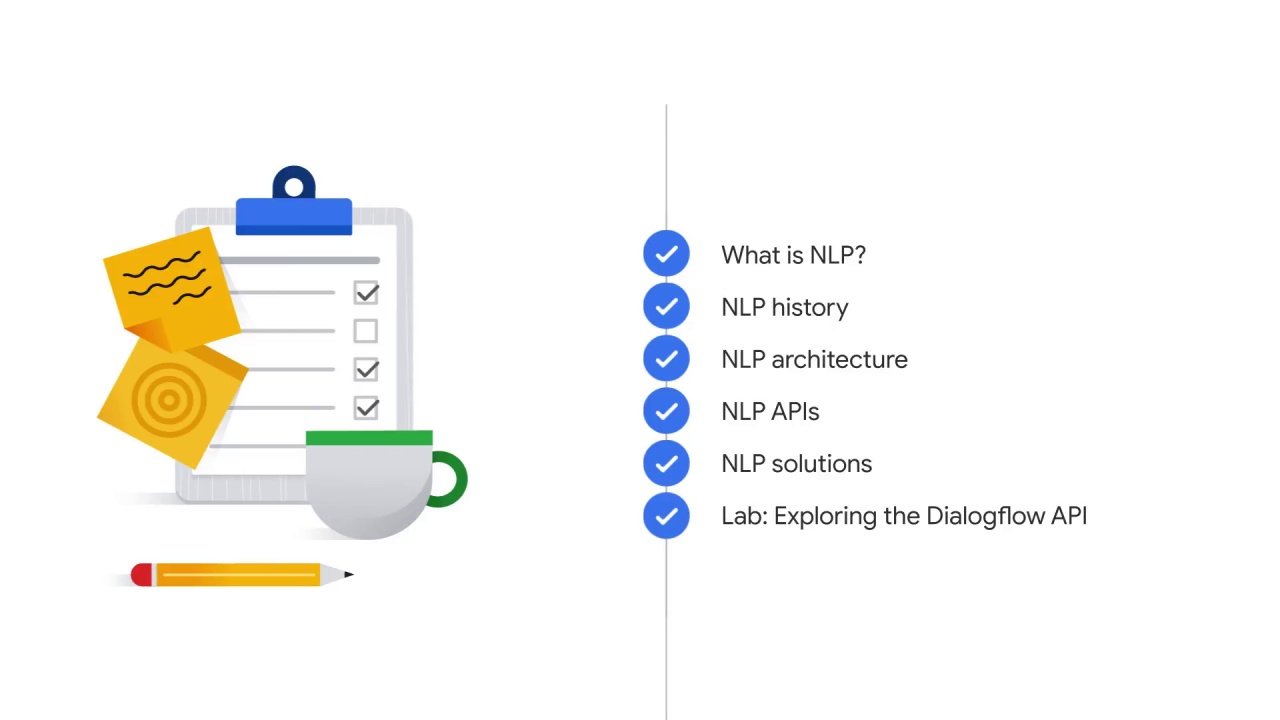
Let’s quickly review the keypoints.
You were first introduced to NLP, a technology that teaches machines to understand human languages.
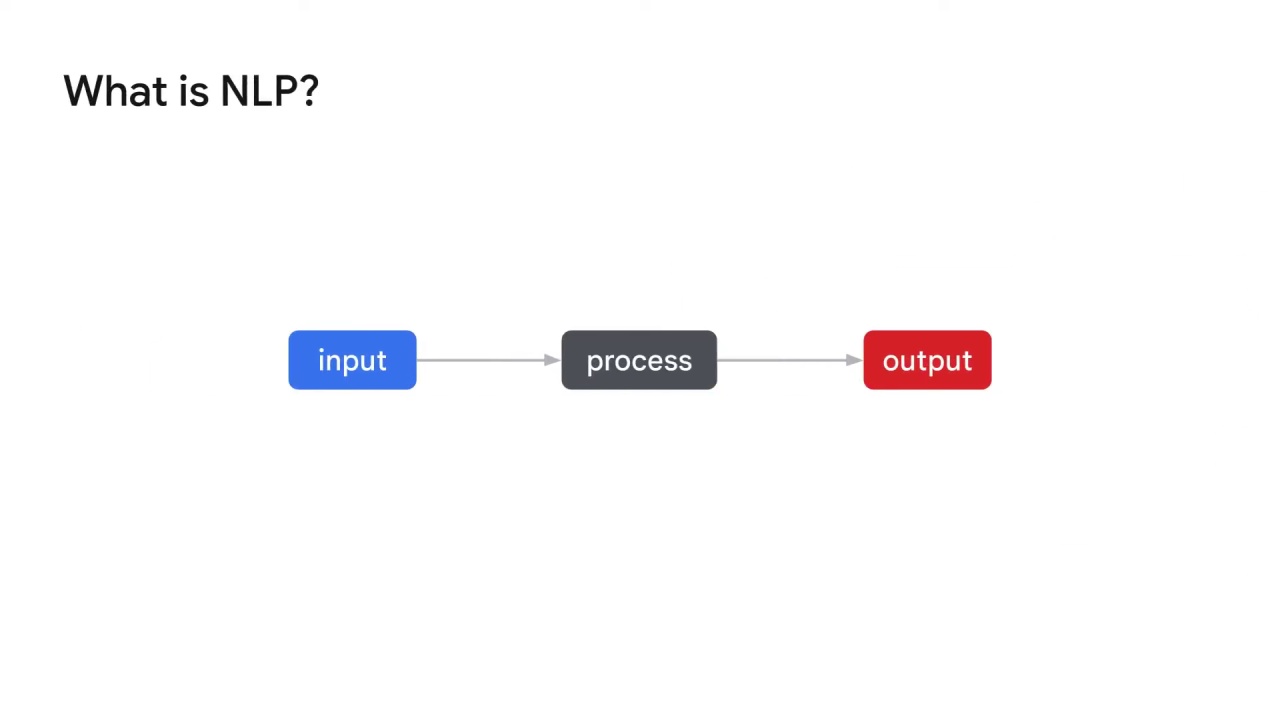
To help understand NLP, you can imagine it as an input-process-output system.
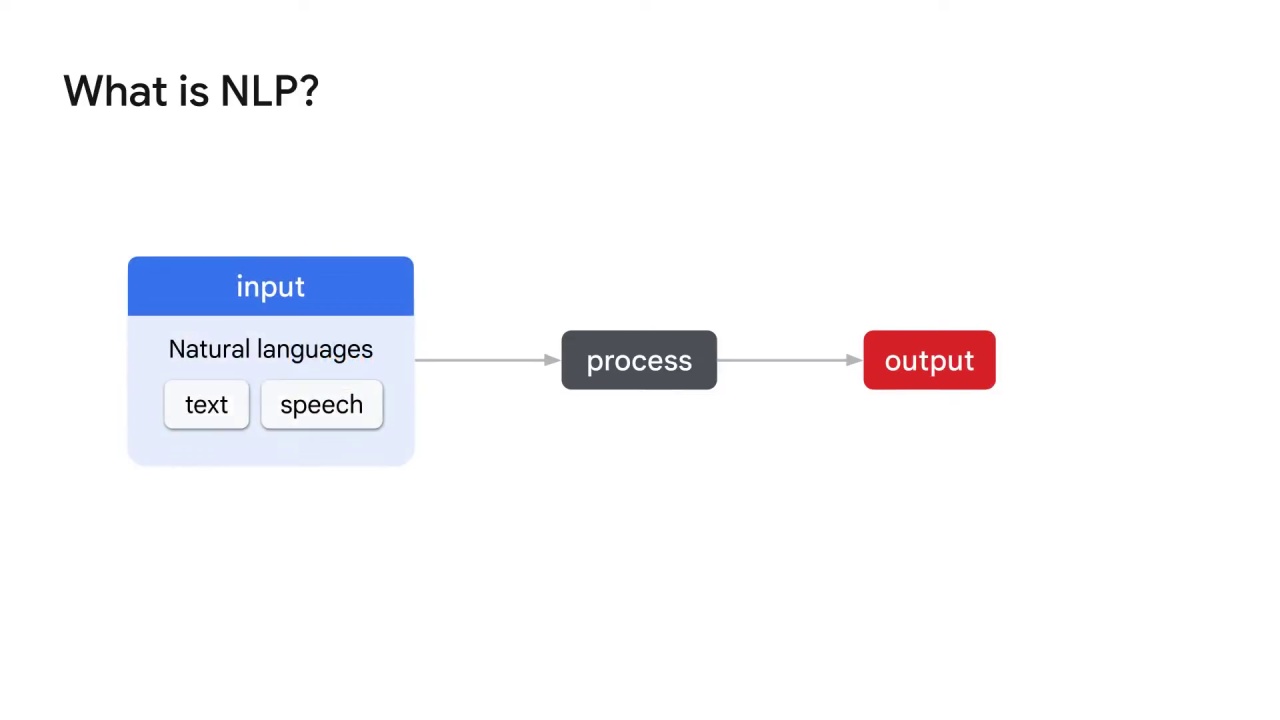
NLP gets the input of natural language,
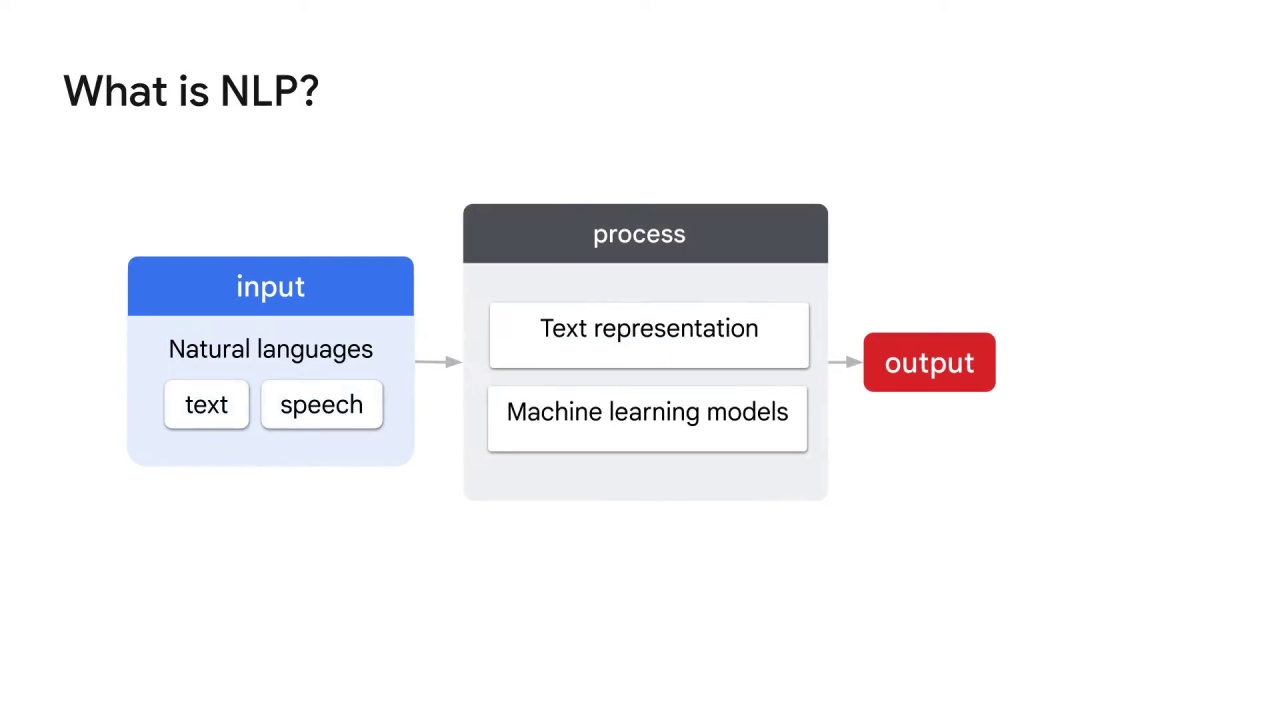
first turns the natural language into vectors that machine understand and then process them with ML models such as neural networks and deep learning.

Finally the NLP generates results based on different objectives such as
text classification,
entity extraction,
machine translation, and
interactive conversation.
You then explored the history of NLP in order to better understand the current state of NLP technology.
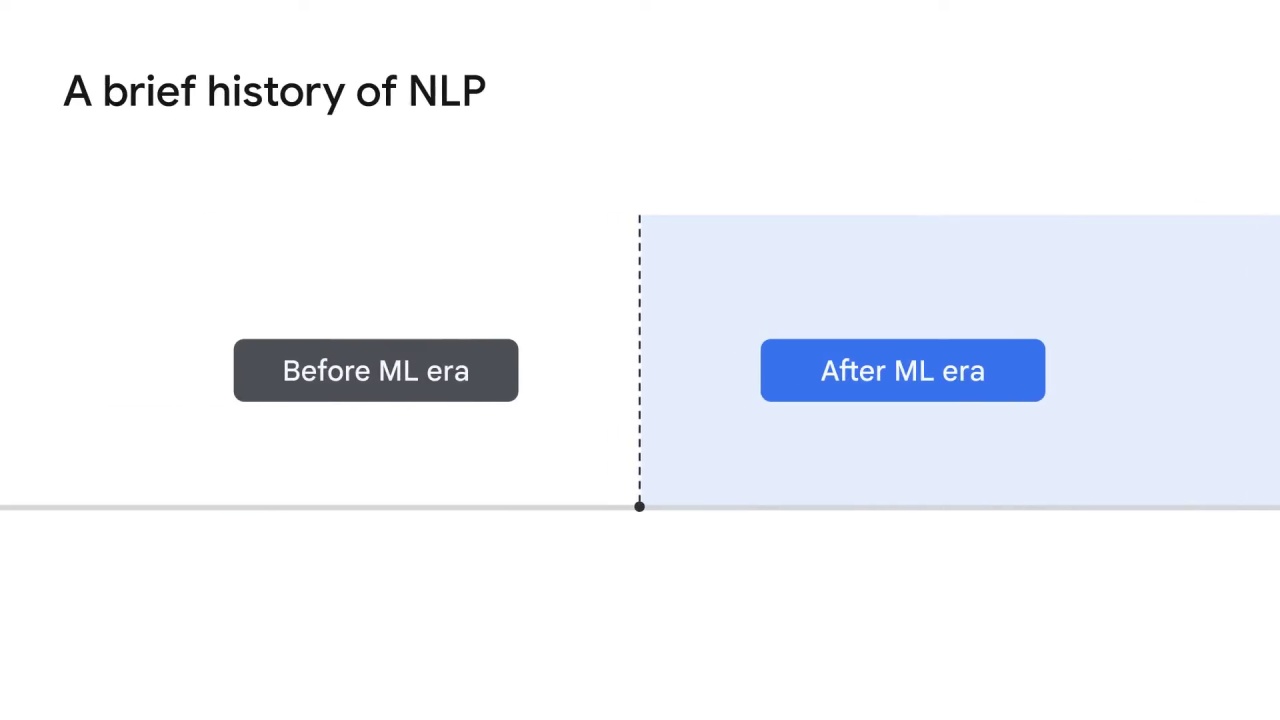
NLP can be simply divided into before and after ML eras.
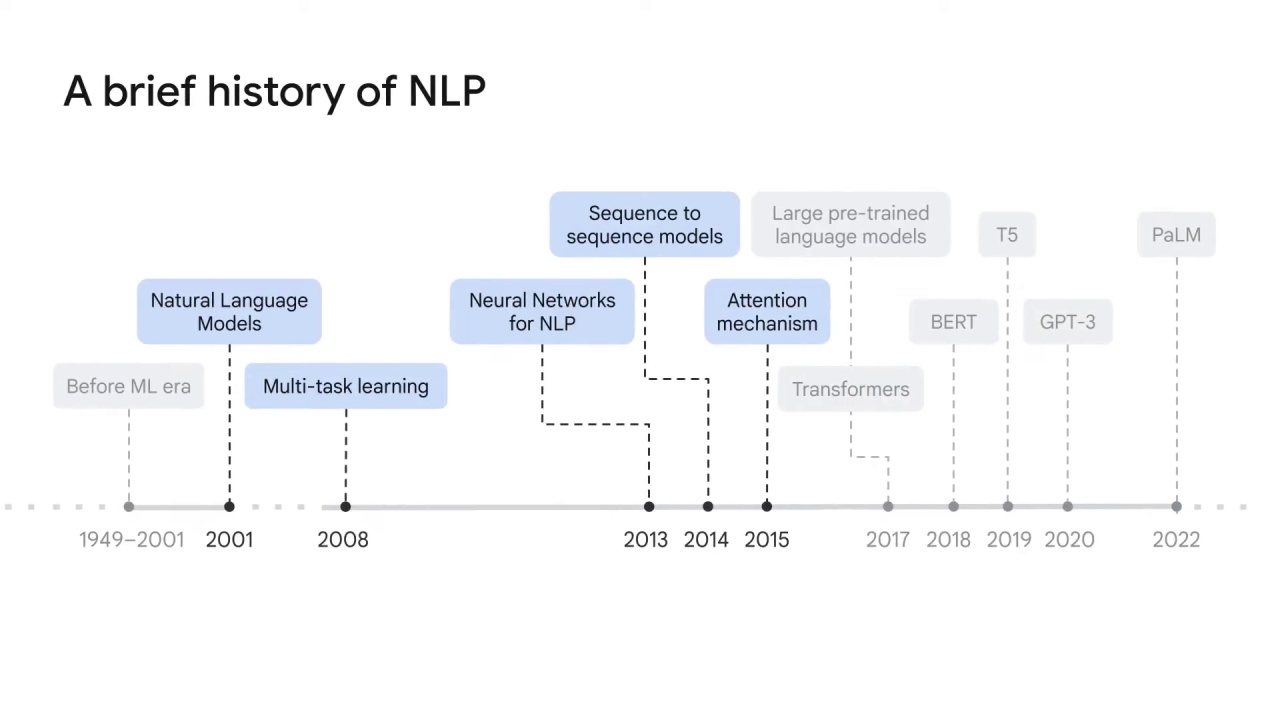
After 2001, with neural networks and deep learning models used in NLP, this field is growing quickly and has led to many breakthroughs.
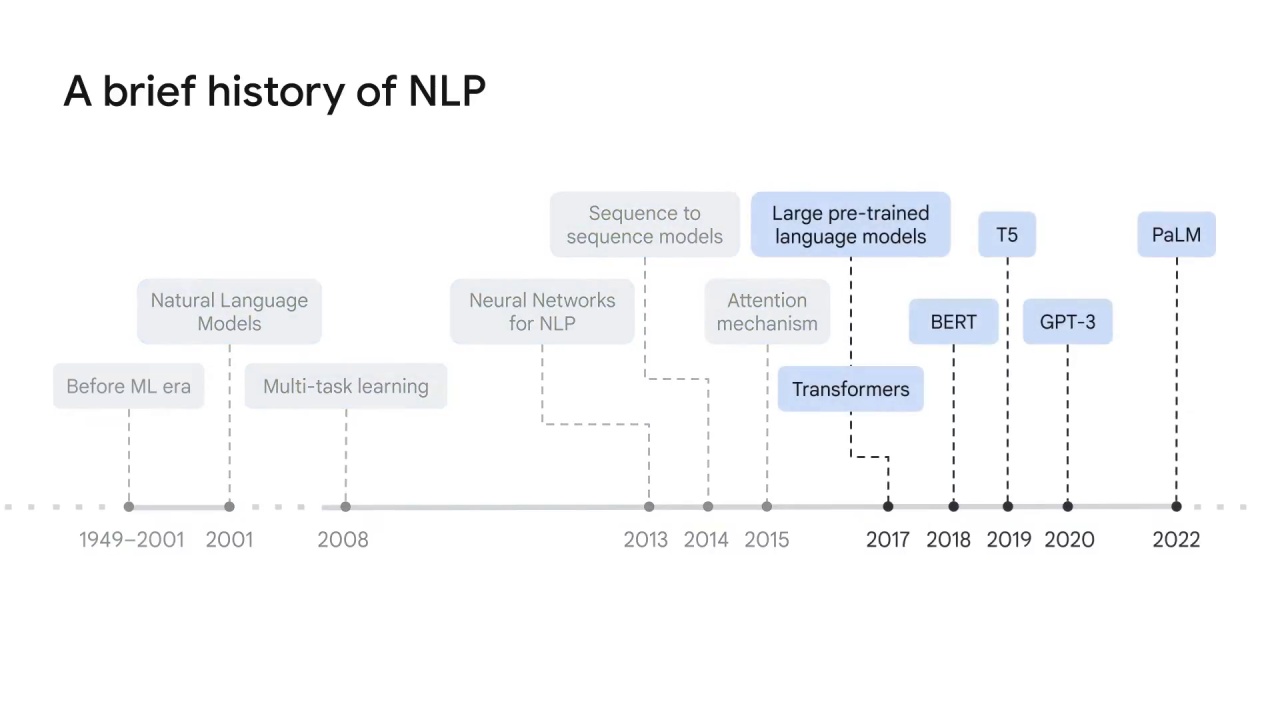
The current trend is to rely on large language models that pre-trained general language models with large amounts of data and parameters and then fine-tuned the models later for more specific tasks.
You were introduced to the NLP architecture on Google Cloud
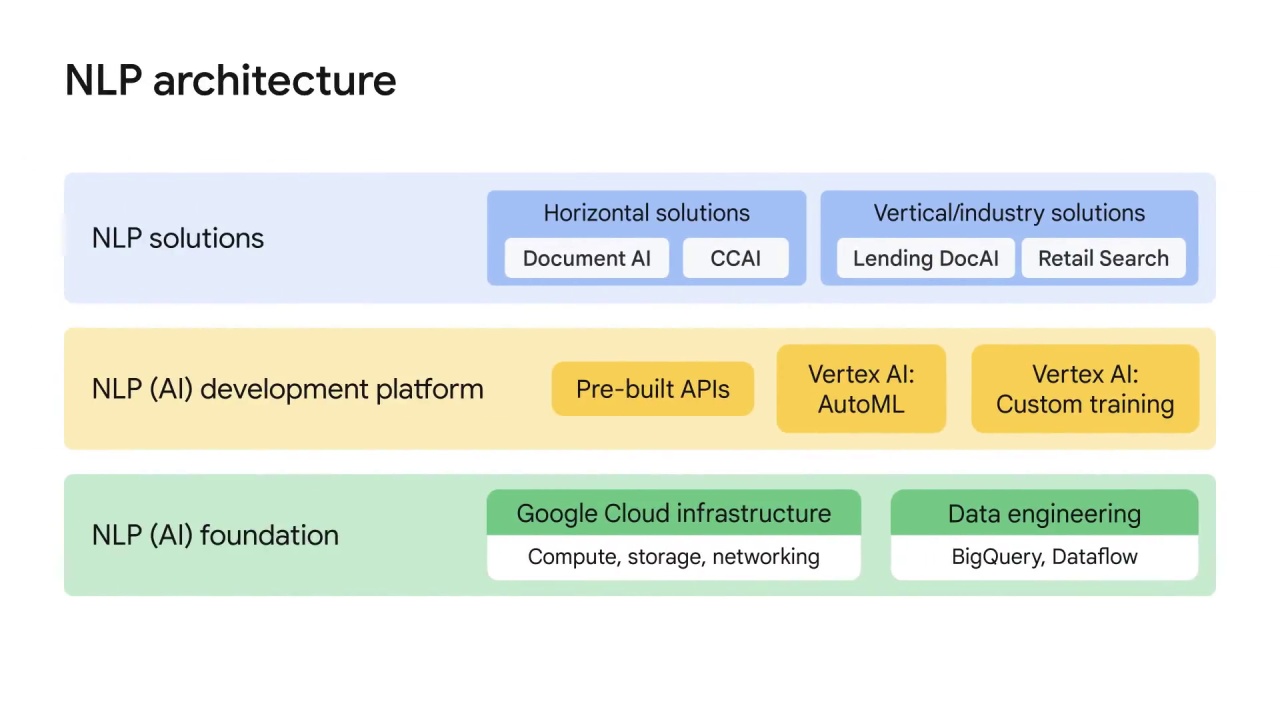
which can be visualized with three layers:
the NLP foundation,
the NLP development platform, and
NLP solutions.
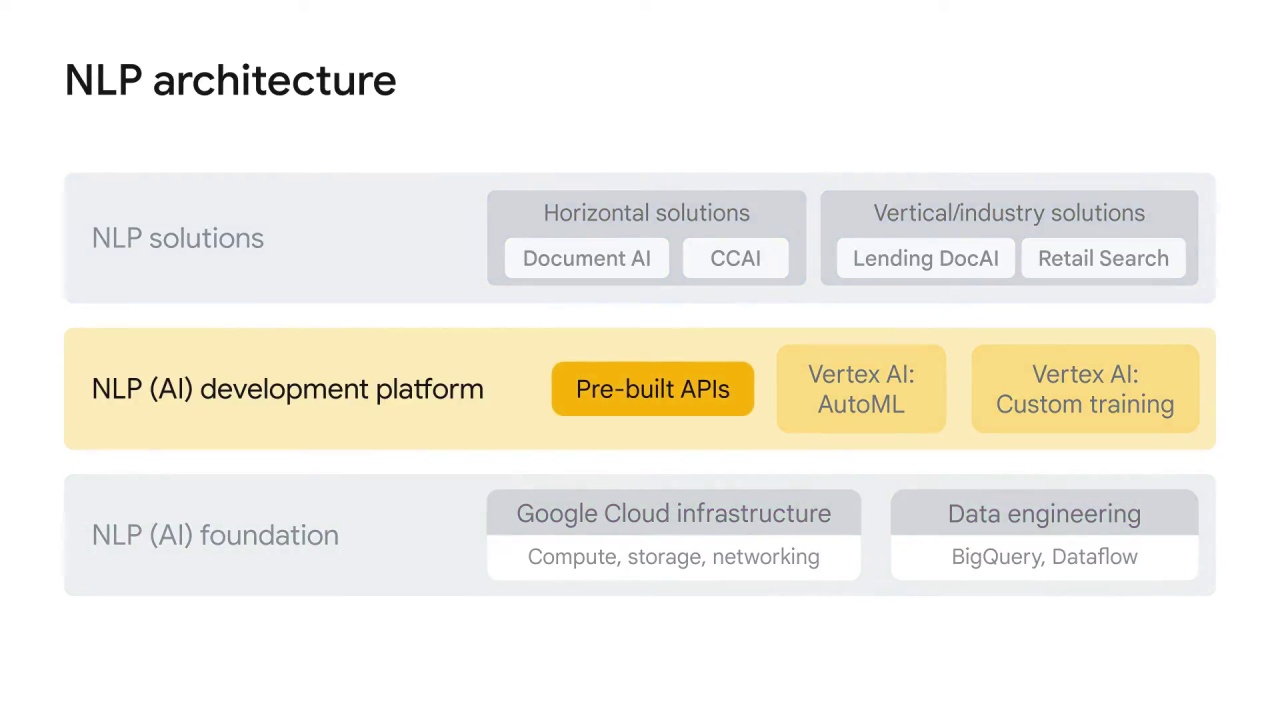
You first focused on the pre-built APIs such as the Dialogflow API.
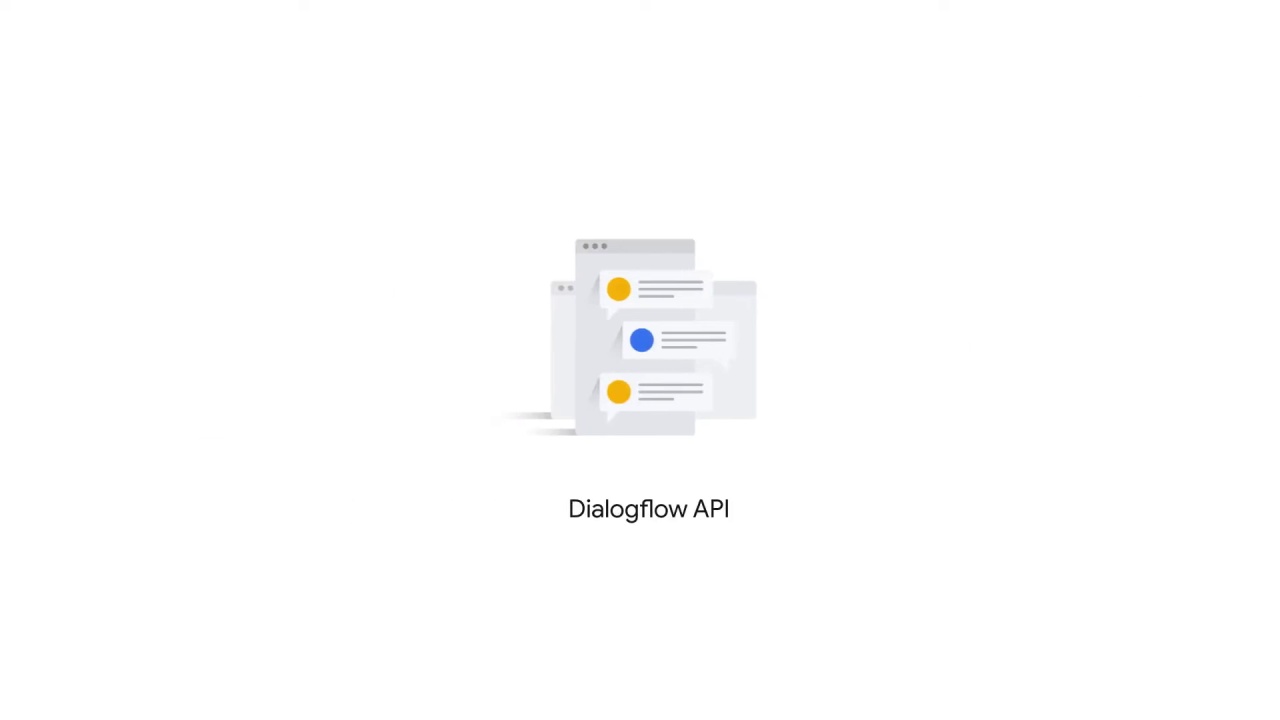
You were introduced to Dialogflow API and the the primary concepts such as
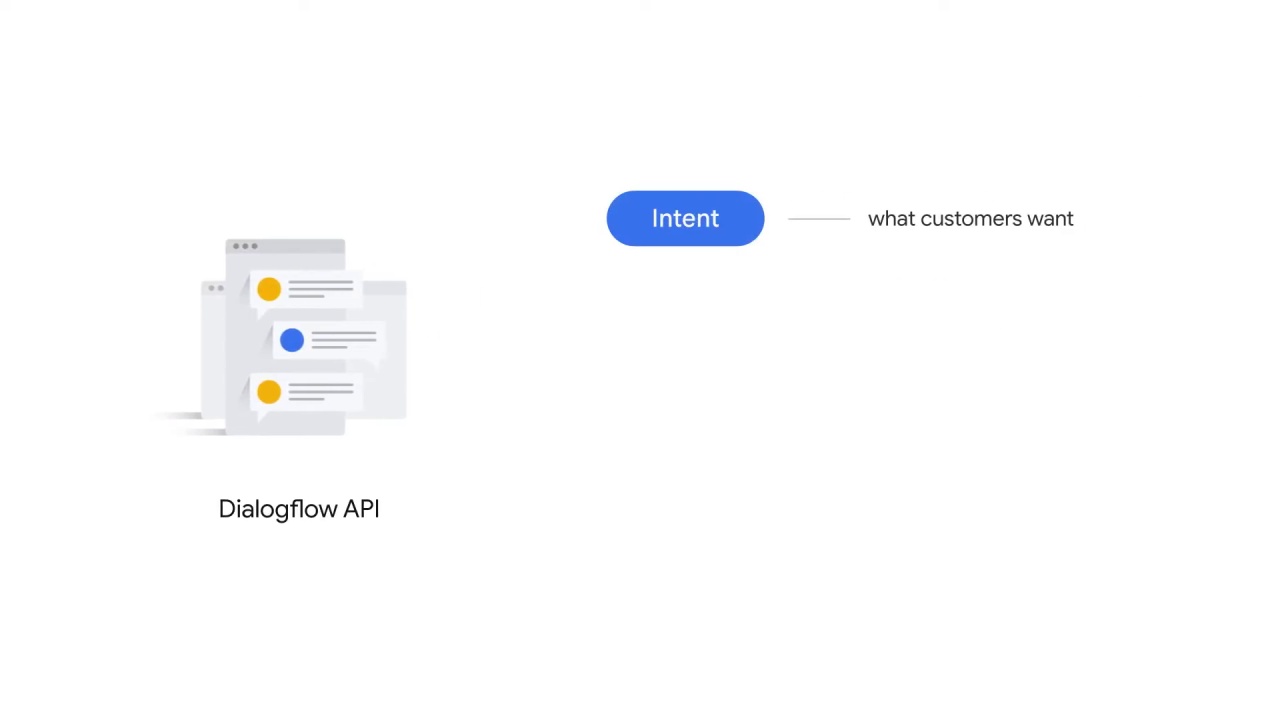
intent (what customers want)
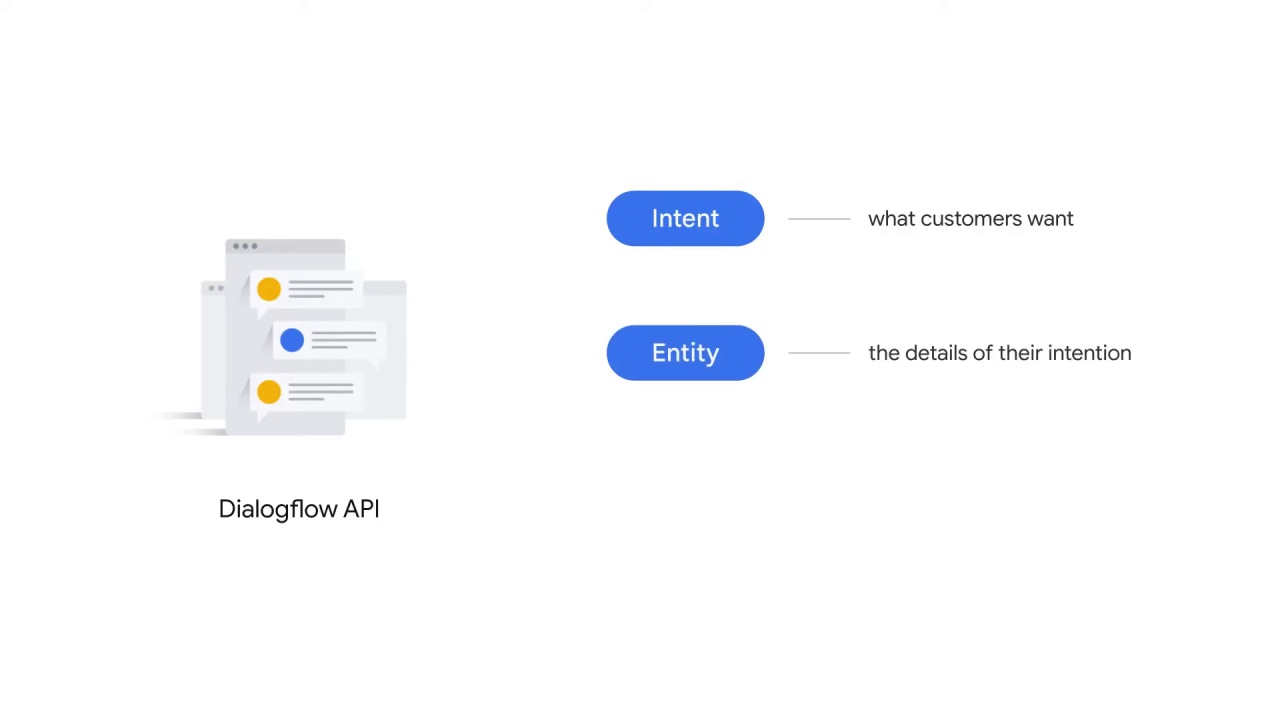
entity (the details of their intention),
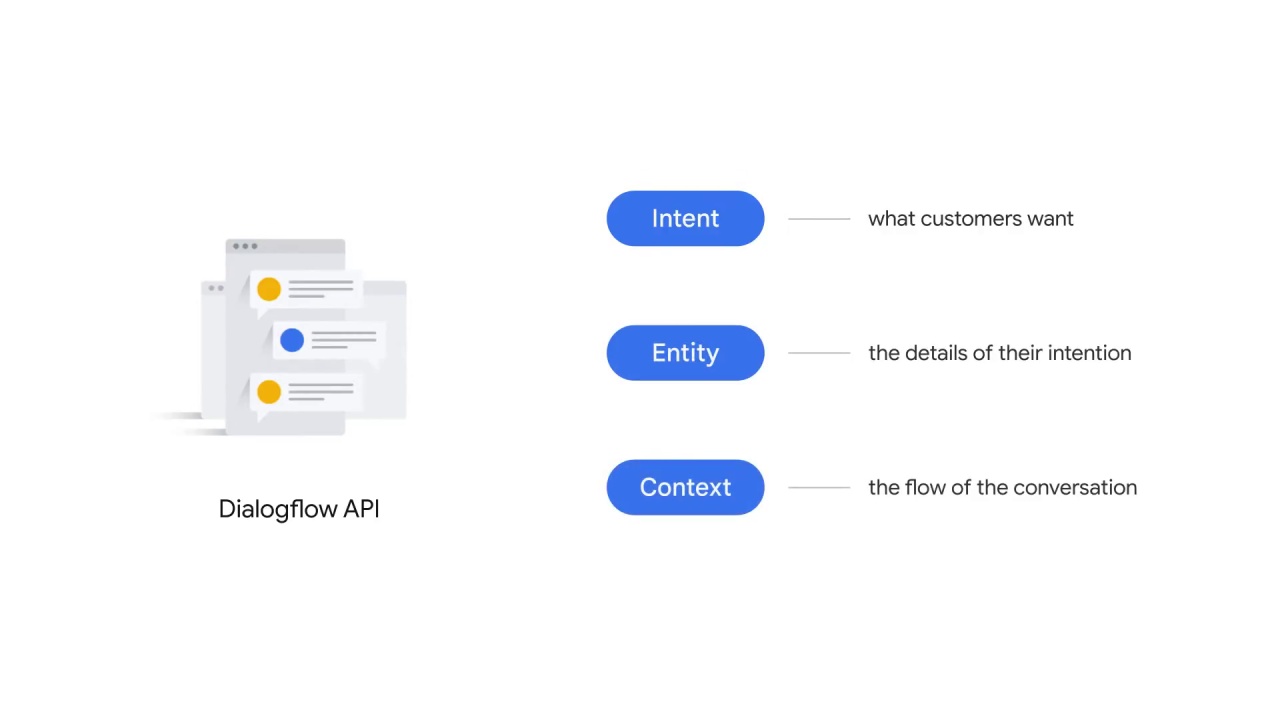
and context (the flow of the conversation).
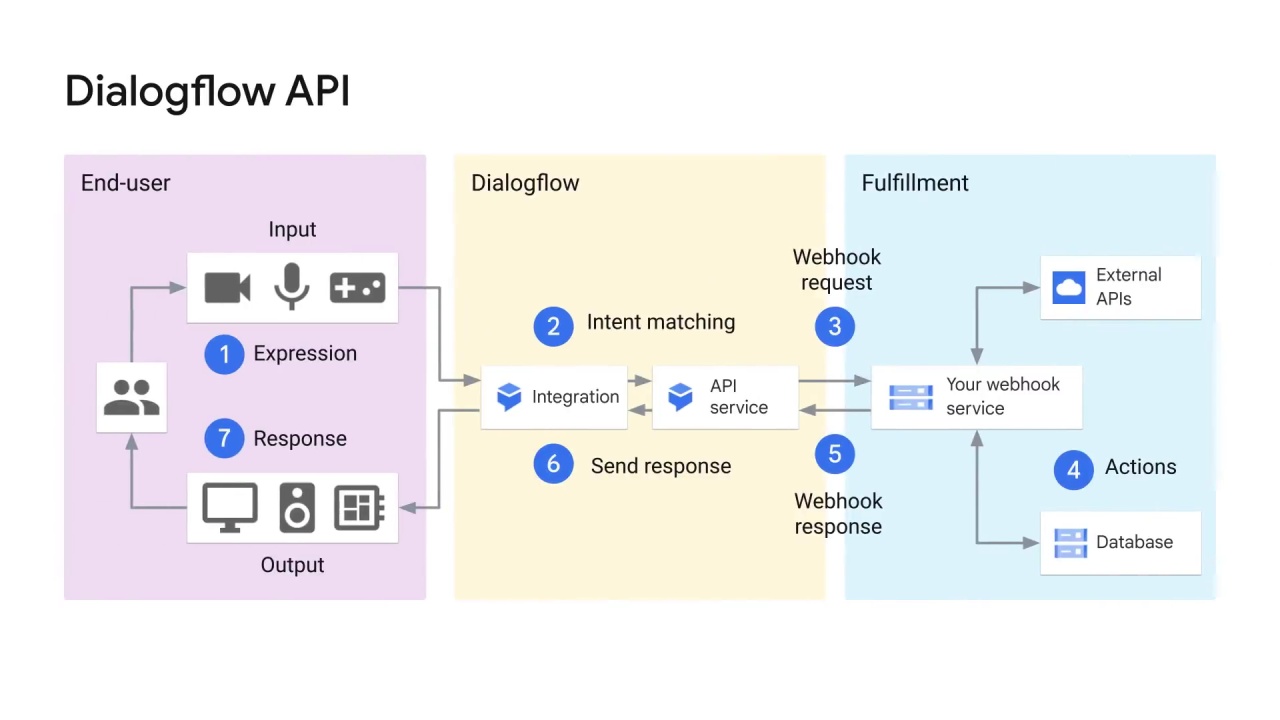
And you then explored how Dialogflow works to build a conversational user interface.
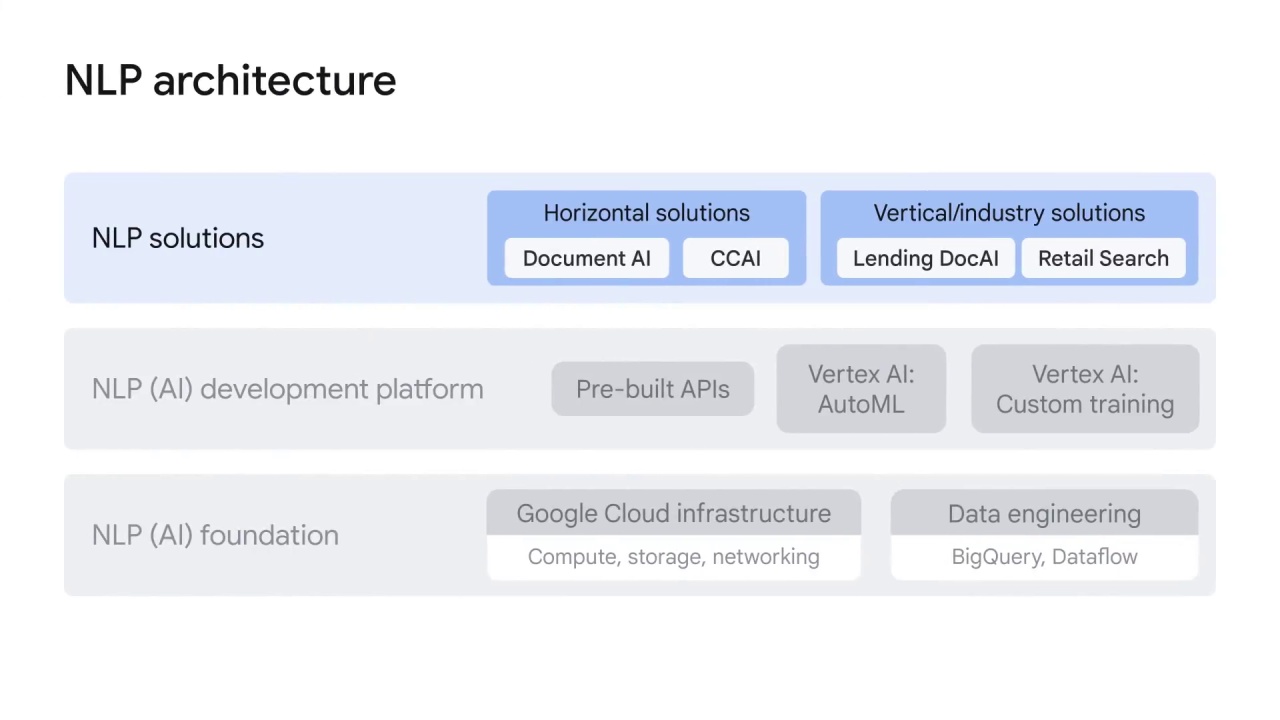
After exploring the pre-built APIs, you were introduced to the NLP solutions such as Contact Center AI and Document AI.
You understood the three components of Contact Center AI:
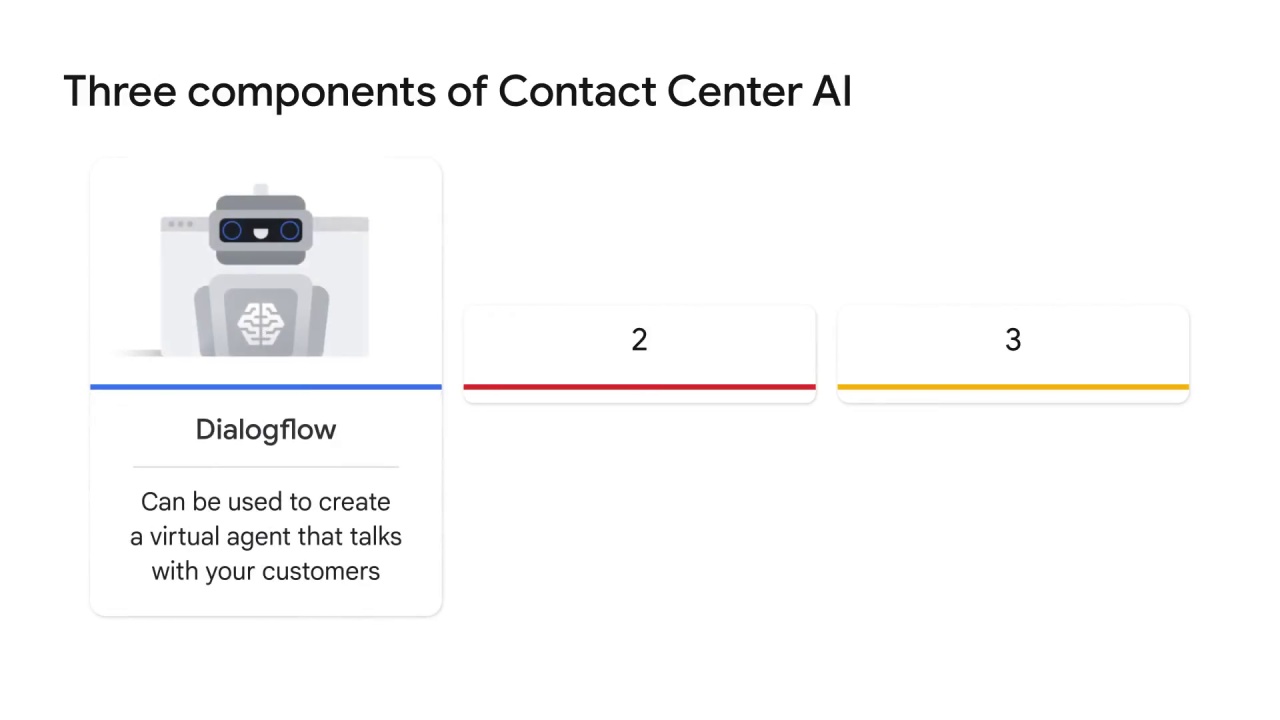
Dialogflow, the virtual agent that conducts automatic conversation;
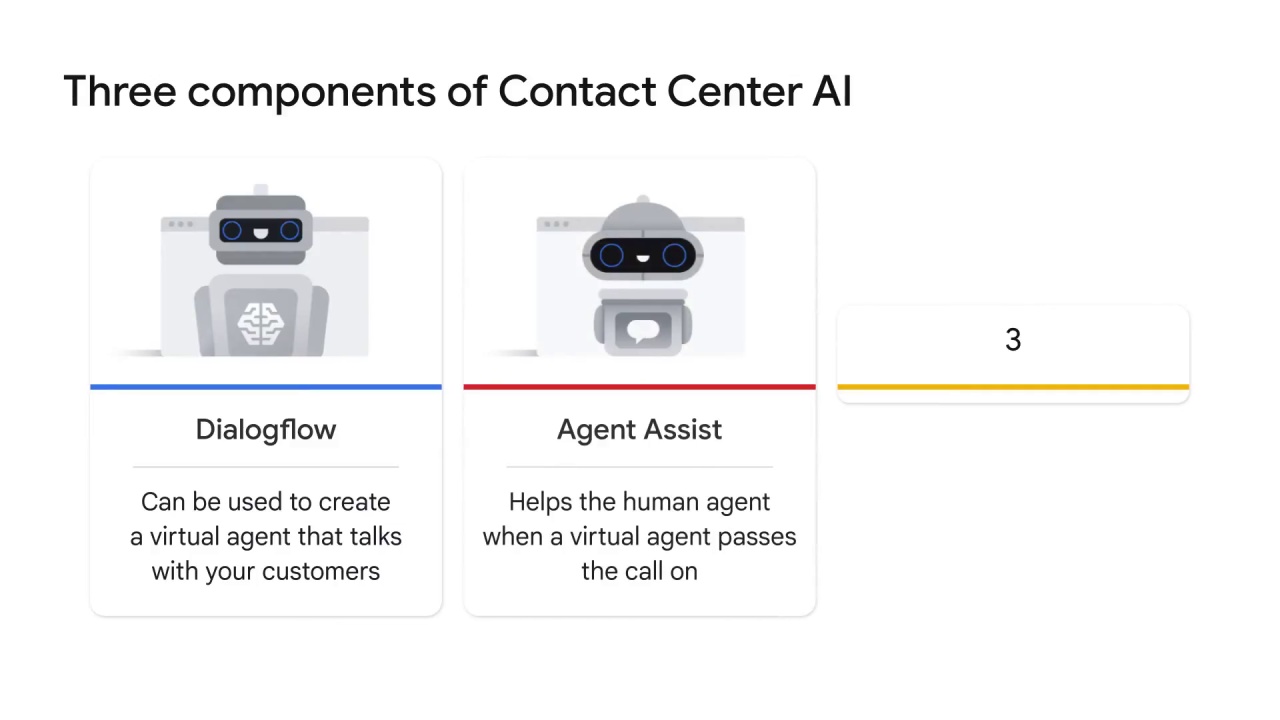
Agent Assist, an AI assistant to support human agents;
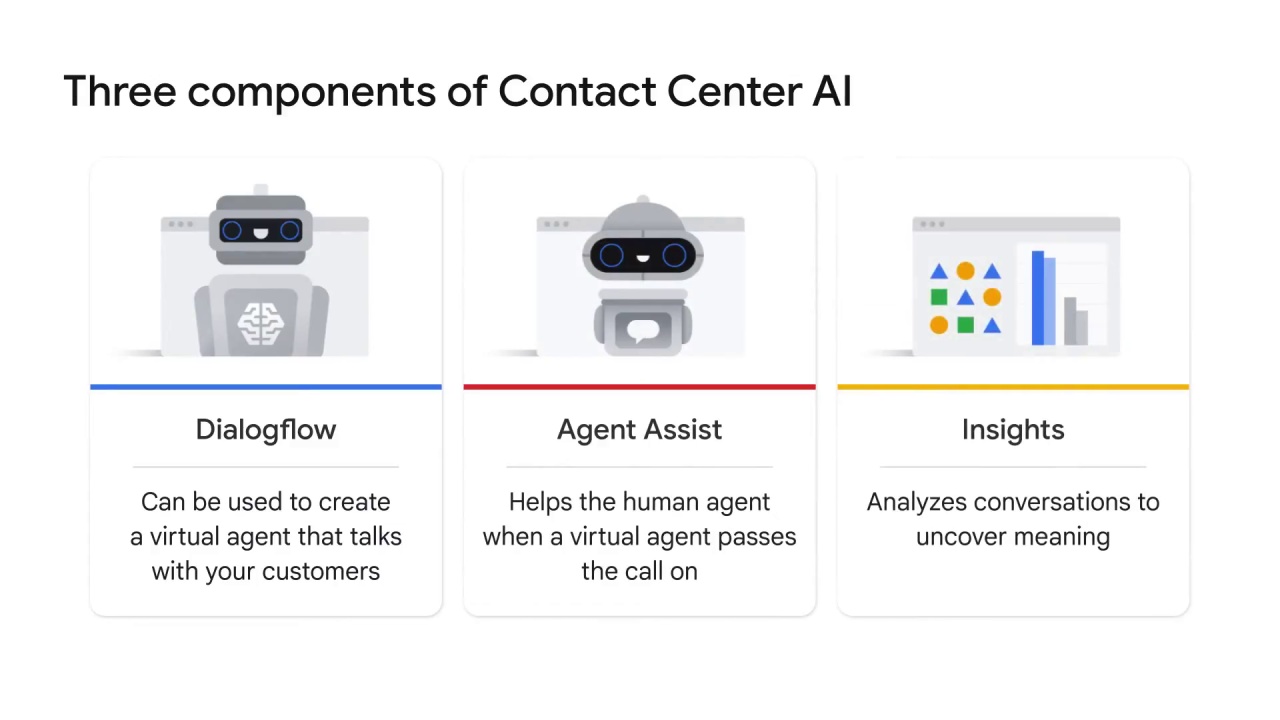
and Insights, a data analyst to analyze conversations in order to uncover meaning.
In addition to Contact Center AI, Google provides other horizontal AI solutions based on NLP technology such as Document AI, or DocAI.
Put simply, Document AI is a document understanding solution.
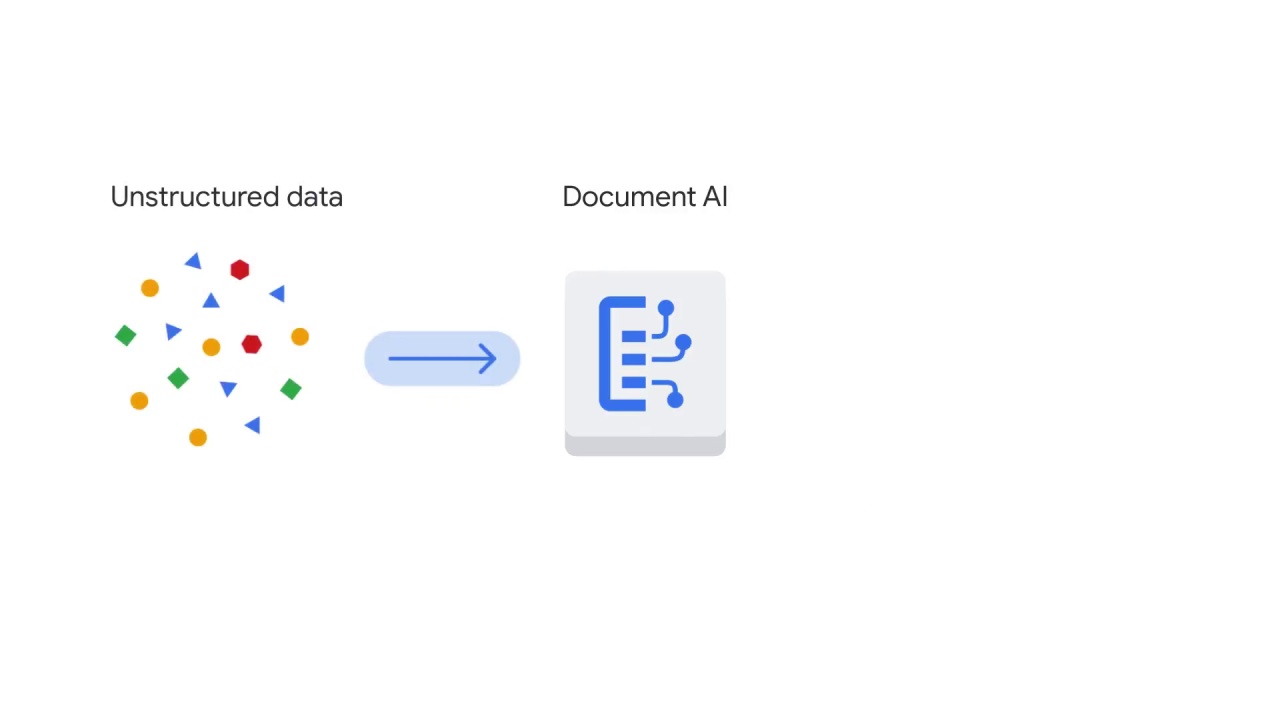
It collects unstructured data such as emails, images, docs, and PDF files
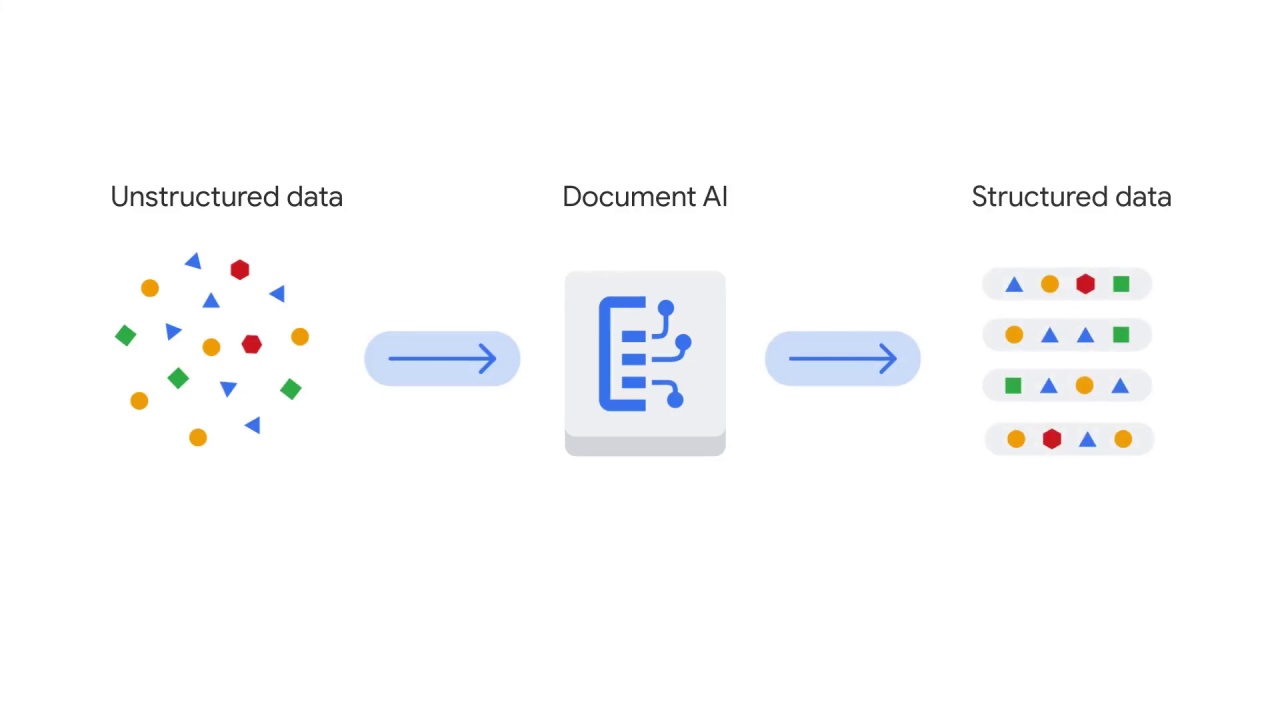
and makes the data easier to understand, analyze, and consume by providing structures.
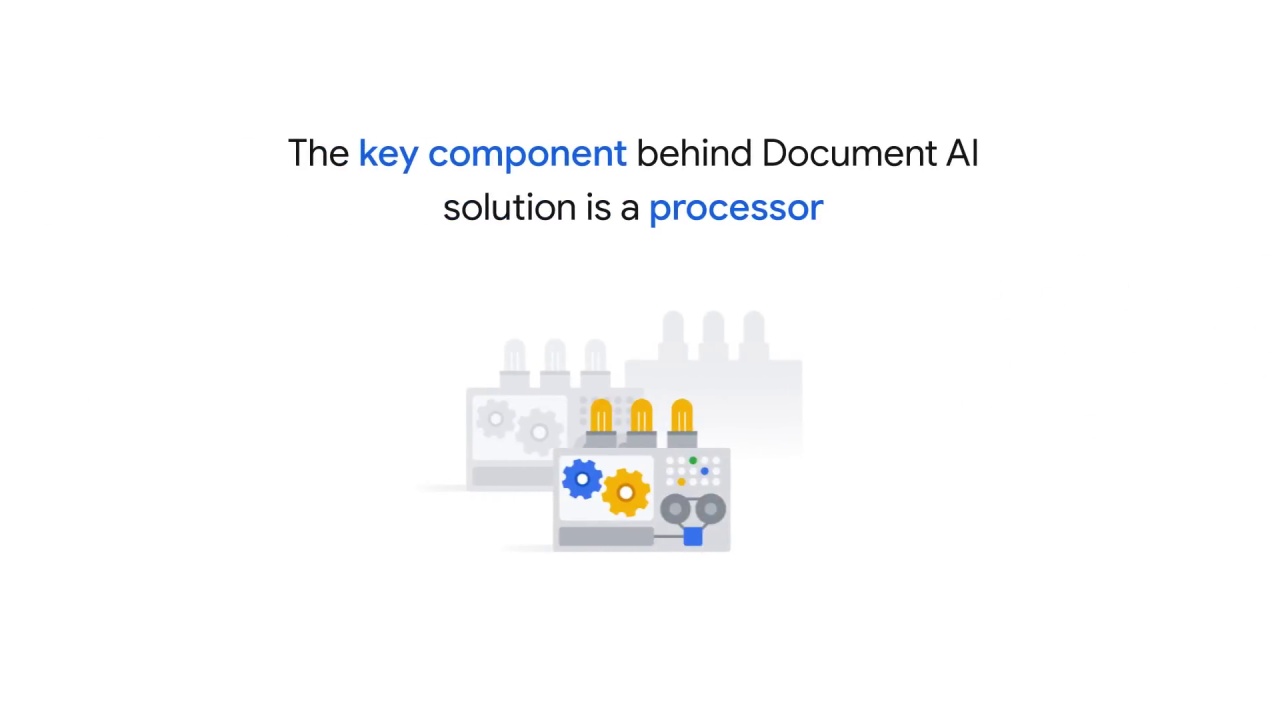
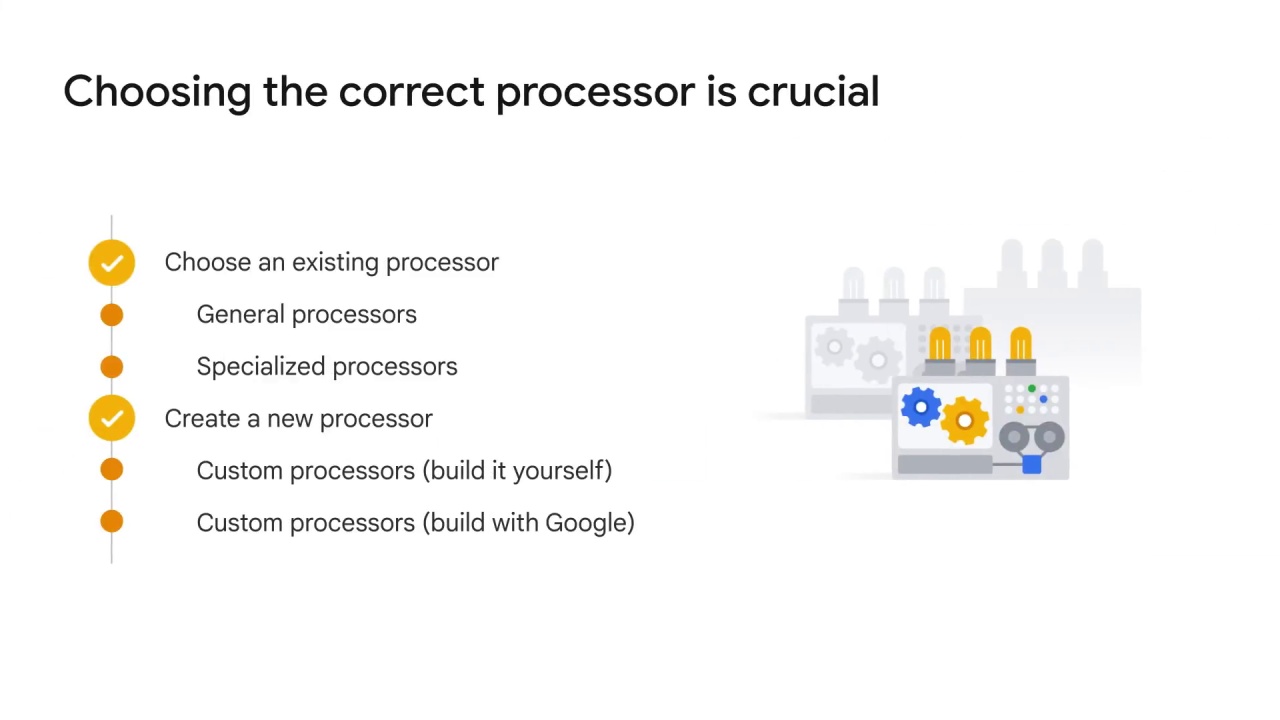
You can either choose an existing processor that is suitable for your use case or create a new processor using the Google Cloud Console.
When you choose an existing processor, you can choose either a general or a specialized processor.
When you create a new processor, you can either create a processor on your own or use Google’s help.
You had a hands-on lab
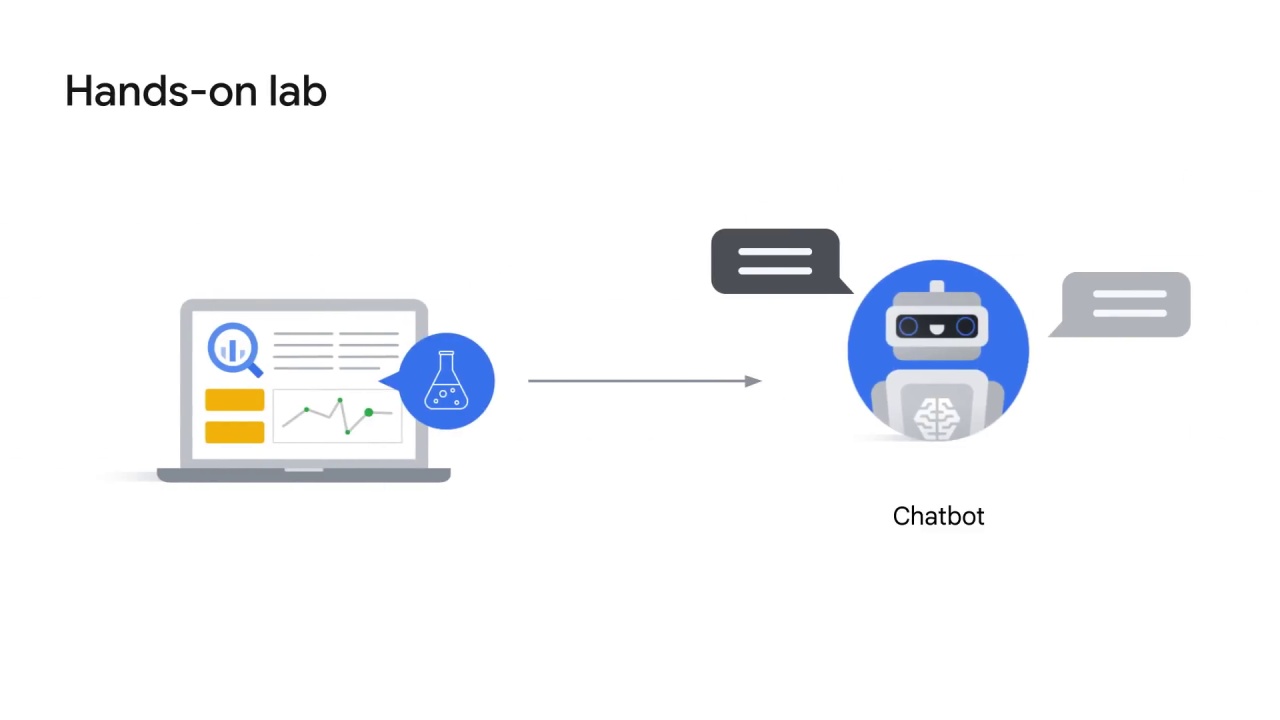
to create a chatbot using the Dialogflow API.